

Uninsured
Medicaid Unwinding
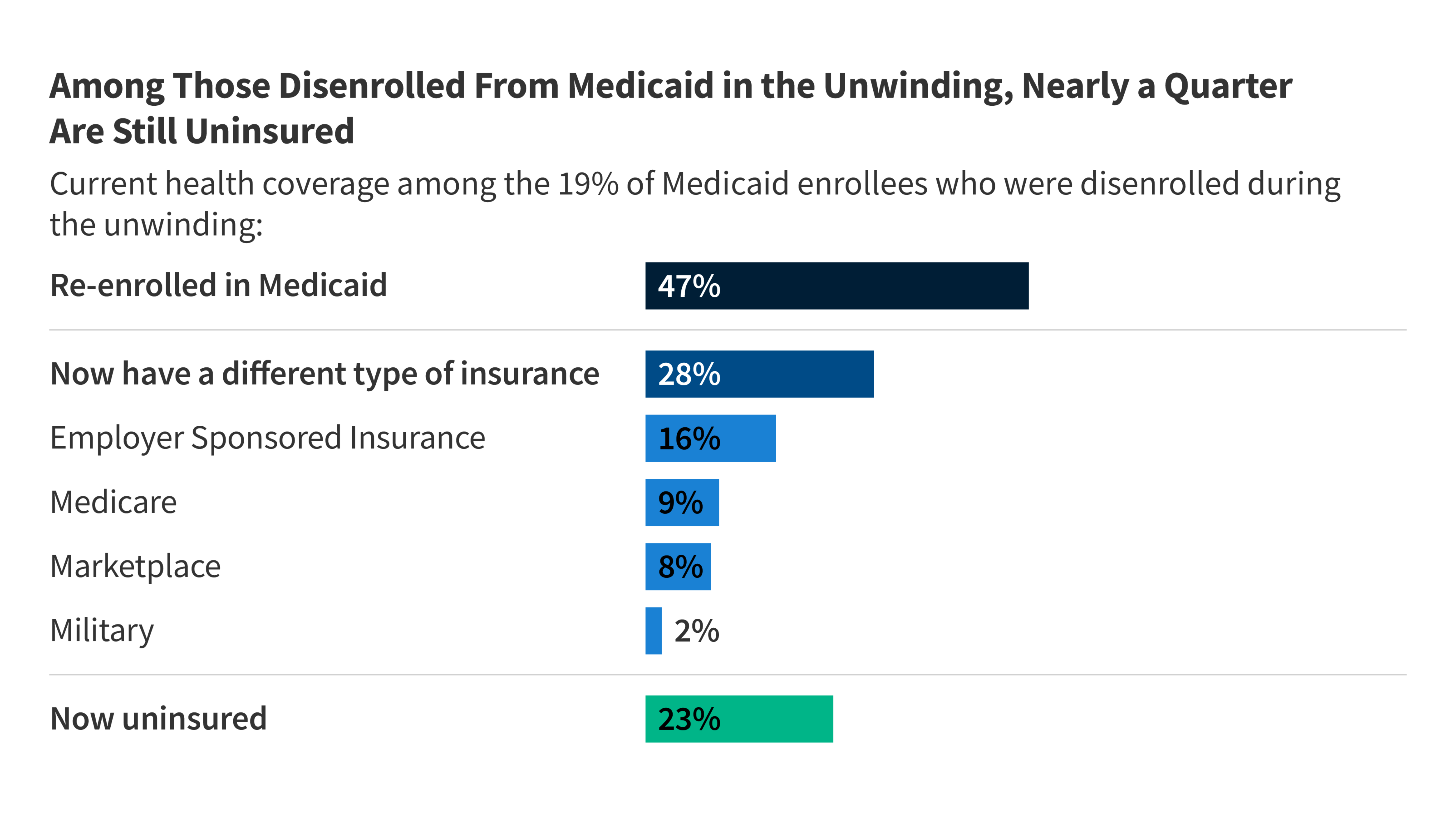
Nearly a Quarter of People Who Say They Were Disenrolled from Medicaid During the Unwinding Are Now Uninsured
Over half who were disenrolled say they put off needed medical care while trying to renew Medicaid, finds a new KFF national survey examining how the unwinding affected enrollees. Overall, 19% of adults who had Medicaid prior to the start of unwinding say they were disenrolled at some point in the past year. Of this group, a large majority (70%) were left at least temporarily uninsured, while 30% already had another form of health coverage in place.
Who are The uninsured?
- column
Forward or Backward on the Uninsured?
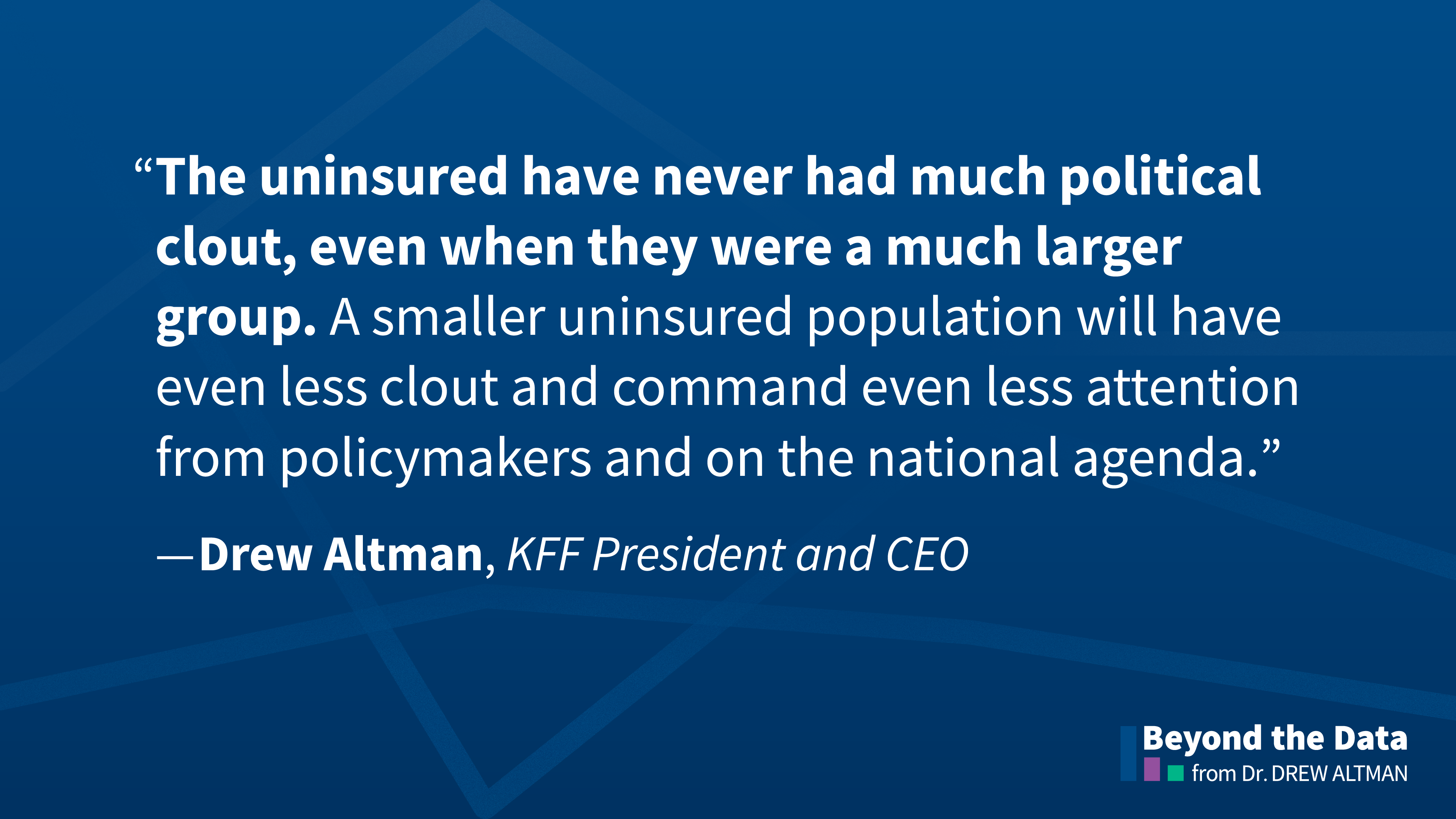 In his new column, KFF President and CEO Drew Altman looks back at the remarkable progress made in expanding coverage for the uninsured and what it could mean politically for today’s remaining uninsured—a population that has had little clout historically and will command even less attention now.
 - issue brief
A Closer Look at the Remaining Uninsured Eligible for Medicaid
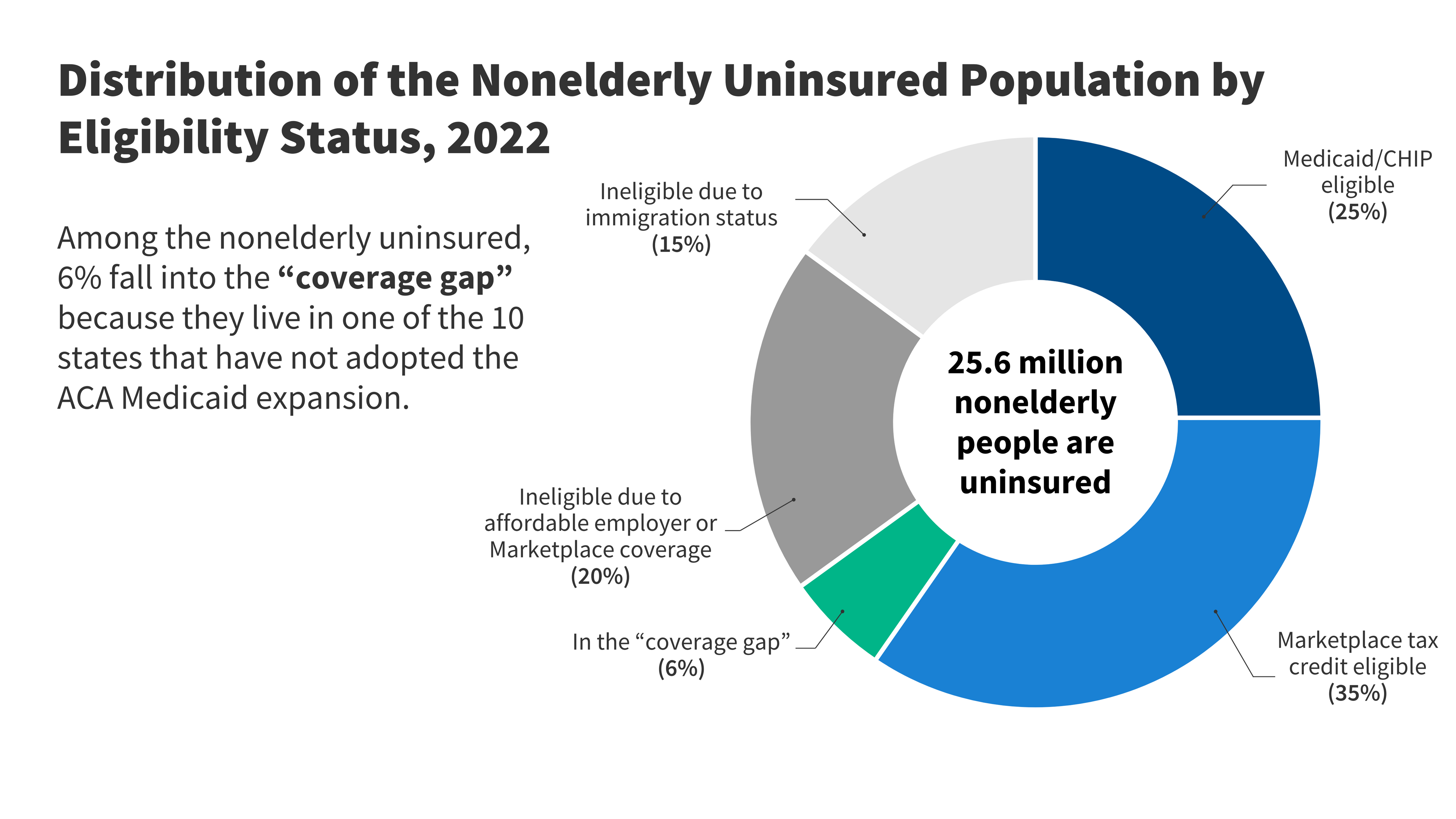 Despite coverage gains during the pandemic, 25.6 million nonelderly people remained uninsured in 2022. Six in ten of the uninsured people are eligible for Medicaid or subsidized plans in the Marketplace but are not enrolled. We examine the characteristics of this population using 2022 national survey data.
 - explainer
Medicaid Expansion and the Coverage Gap
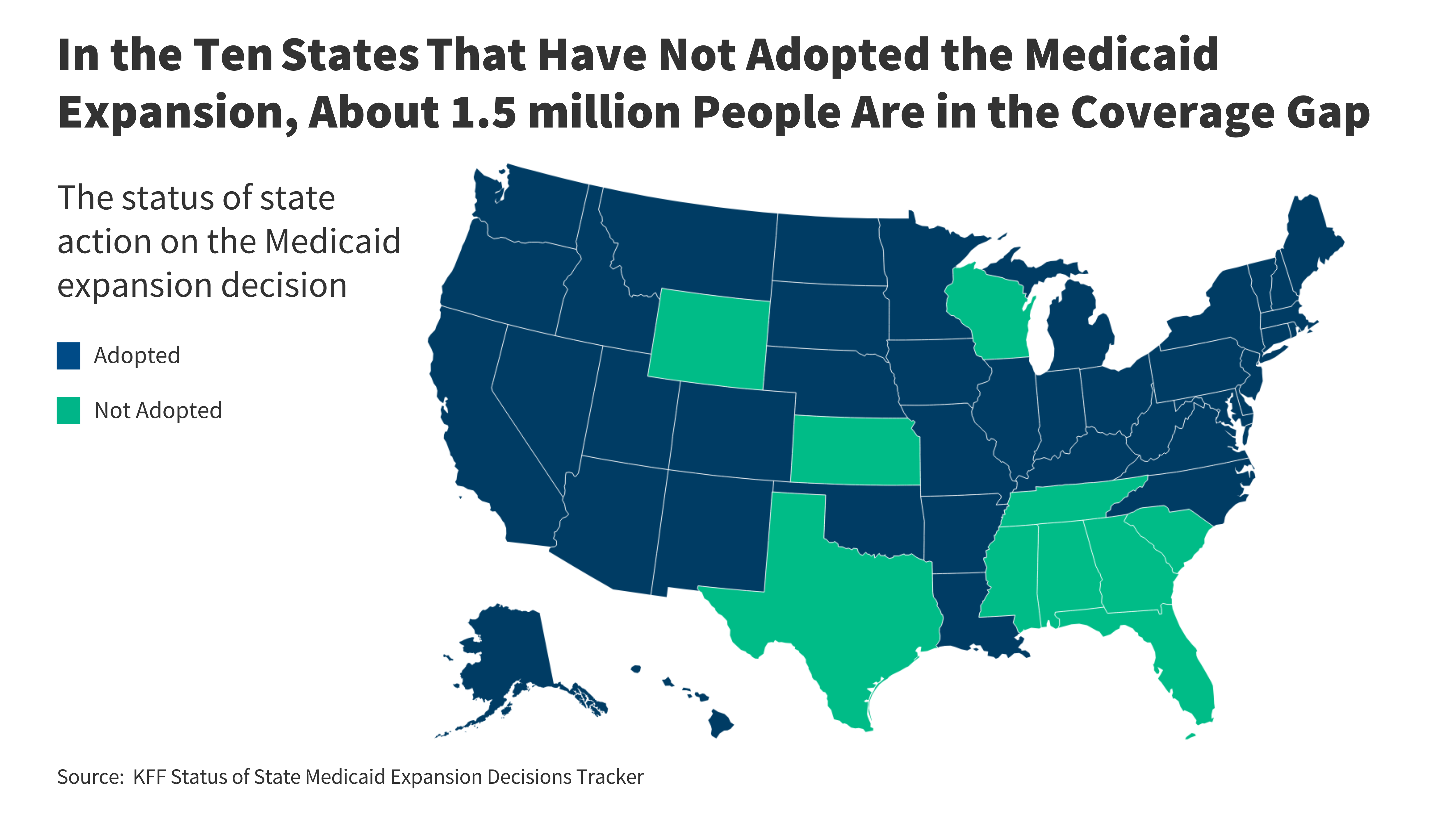 Ten years after the implementation of the Affordable Care Act’s coverage options, ten states have not adopted the Medicaid expansion, leaving 1.5 million uninsured people without an affordable coverage option. States that have not implemented the expansion have uninsured rates that are nearly double the rate of expansion states (14.1% compared to 7.5%).
 - report
Key Facts on Health and Care by Race, Ethnicity
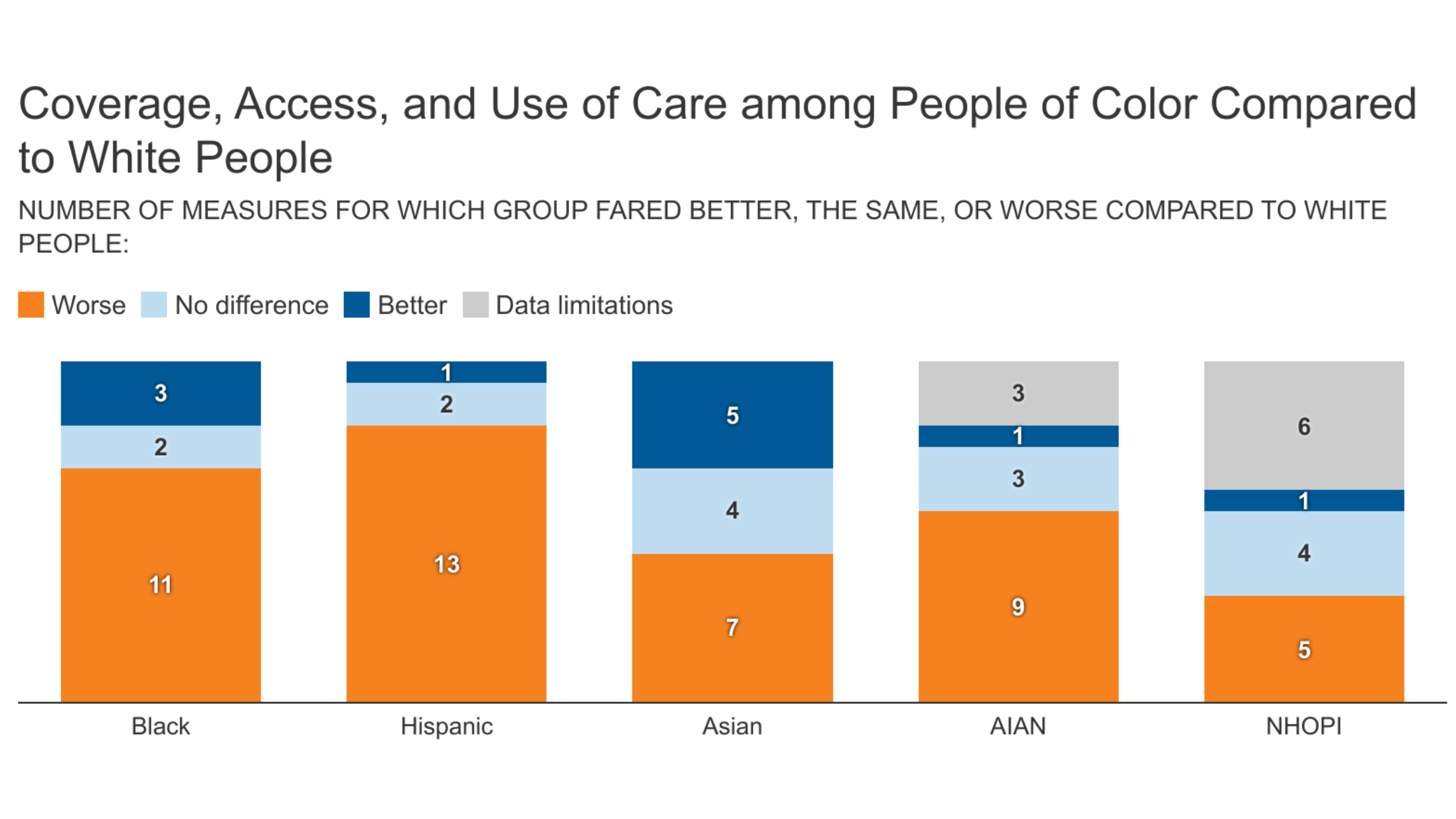 Overall, Black, Hispanic, and AIAN people fared worse compared to White people across most examined measures of health coverage and access to and use of care. Despite small gains in health coverage between 2019 and 2021, nonelderly AIAN, Hispanic, NHOPI, and Black people remained more likely to be uninsured compared to their White counterparts.
The uninsured: How costs affect care and health, 2022
Latest Polling10%
Percent of adults who reported not having health insurance
29%
Percent of uninsured adults who reported delaying or not getting care due to health costs
75%
Percent of uninsured adults who worry about medical bills if they get sick or have an accident
38%
Percent of uninsured adults who reported not having a usual source of care (vs. 8% of insured adults)
Latest News
-
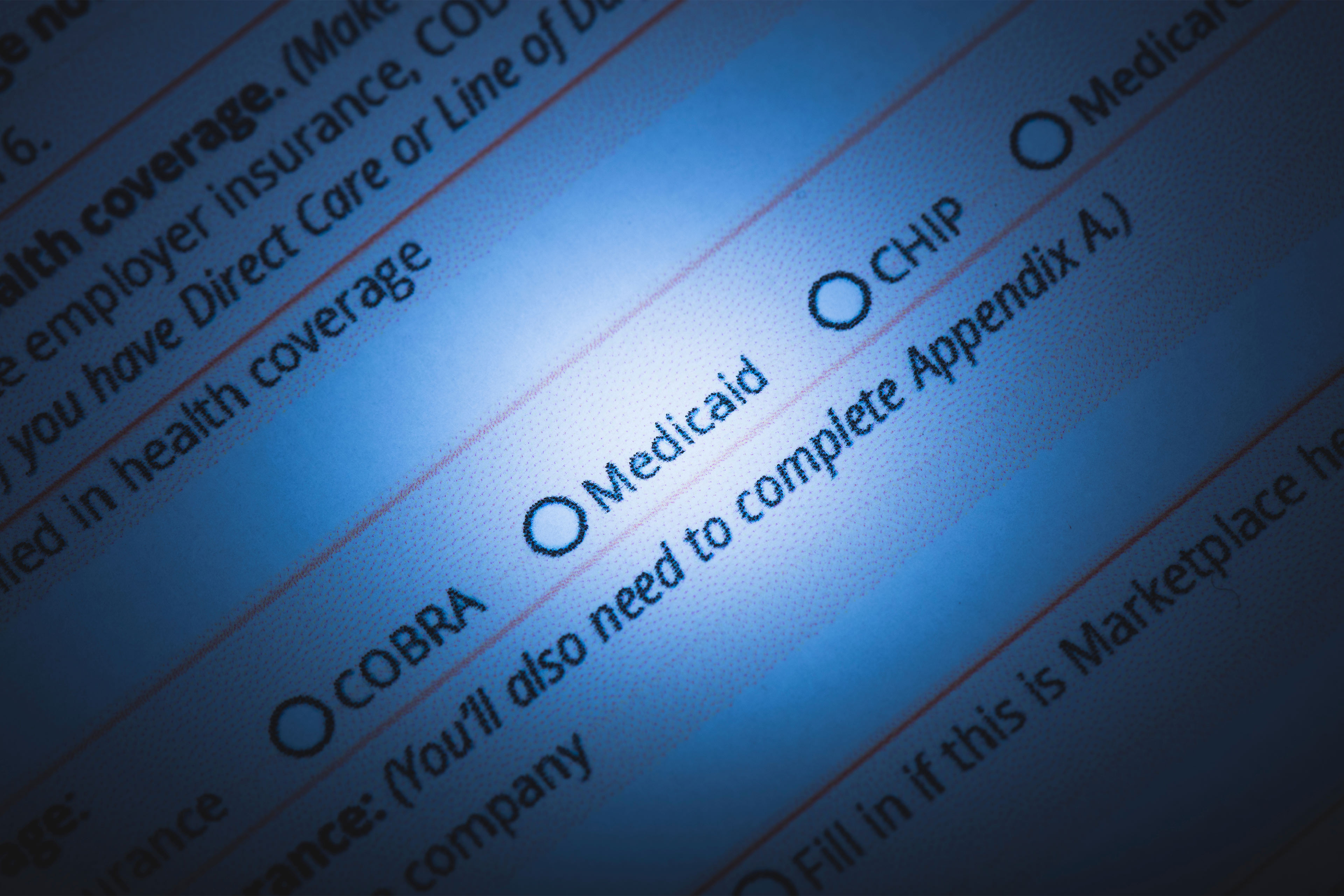
Casi 1 de cada 4 adultos desafiliados de Medicaid siguen sin seguro, indica encuesta
-
Nearly 1 in 4 Adults Dumped From Medicaid Are Now Uninsured, Survey Finds
-
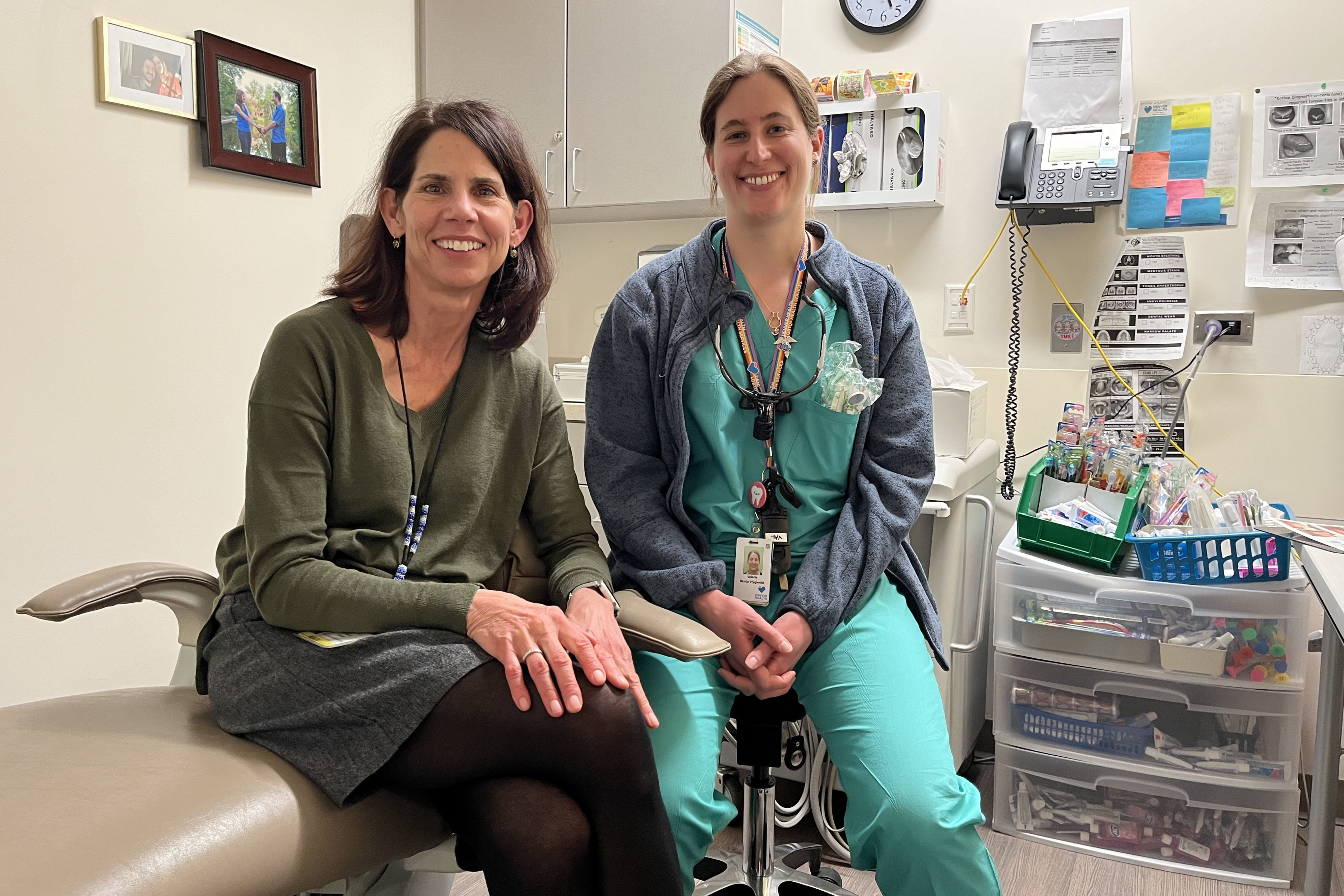
Doctors Take On Dental Duties to Reach Low-Income and Uninsured Patients
-
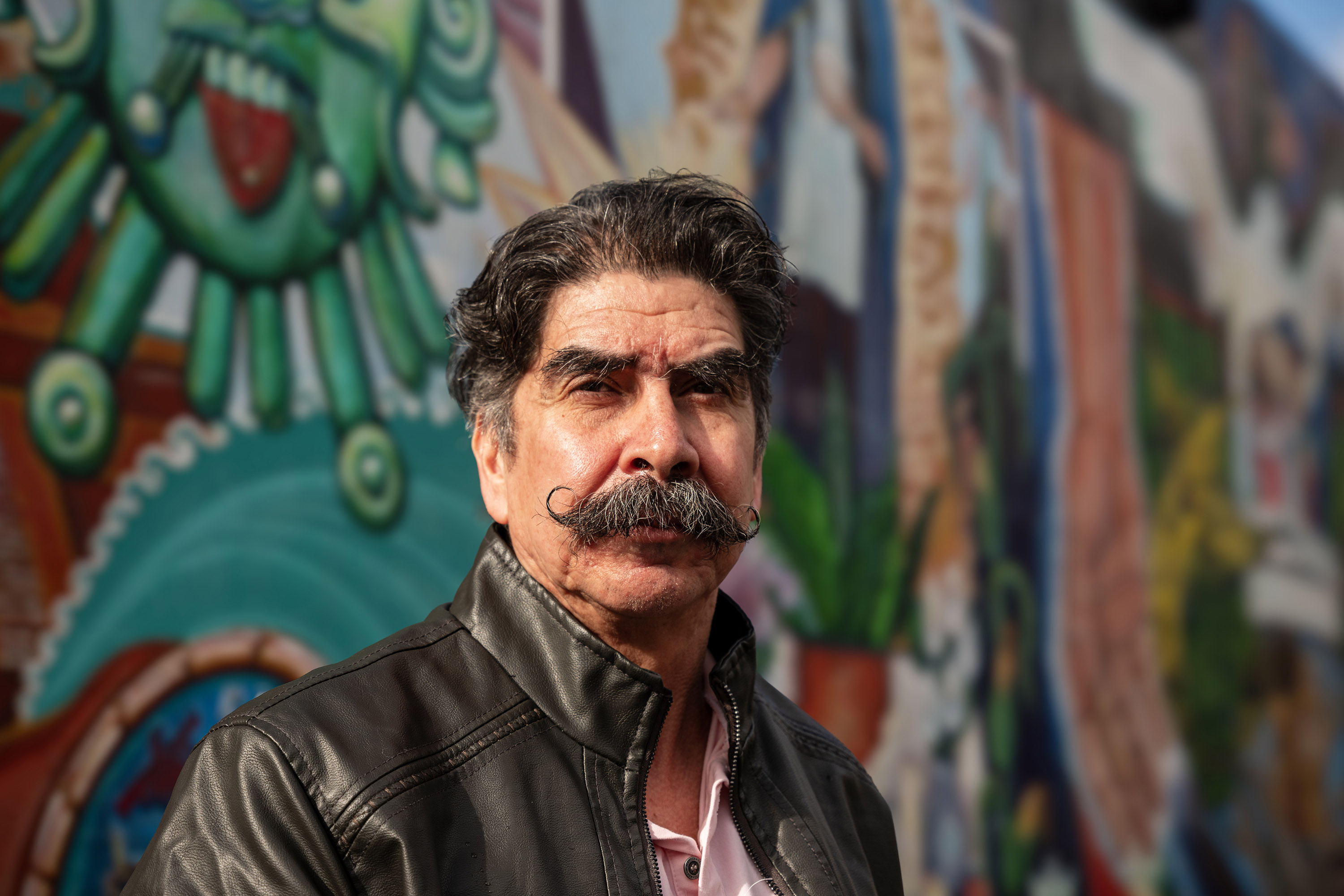
En California, la cobertura de salud ampliada a inmigrantes choca con las revisiones de Medicaid