

Medicare
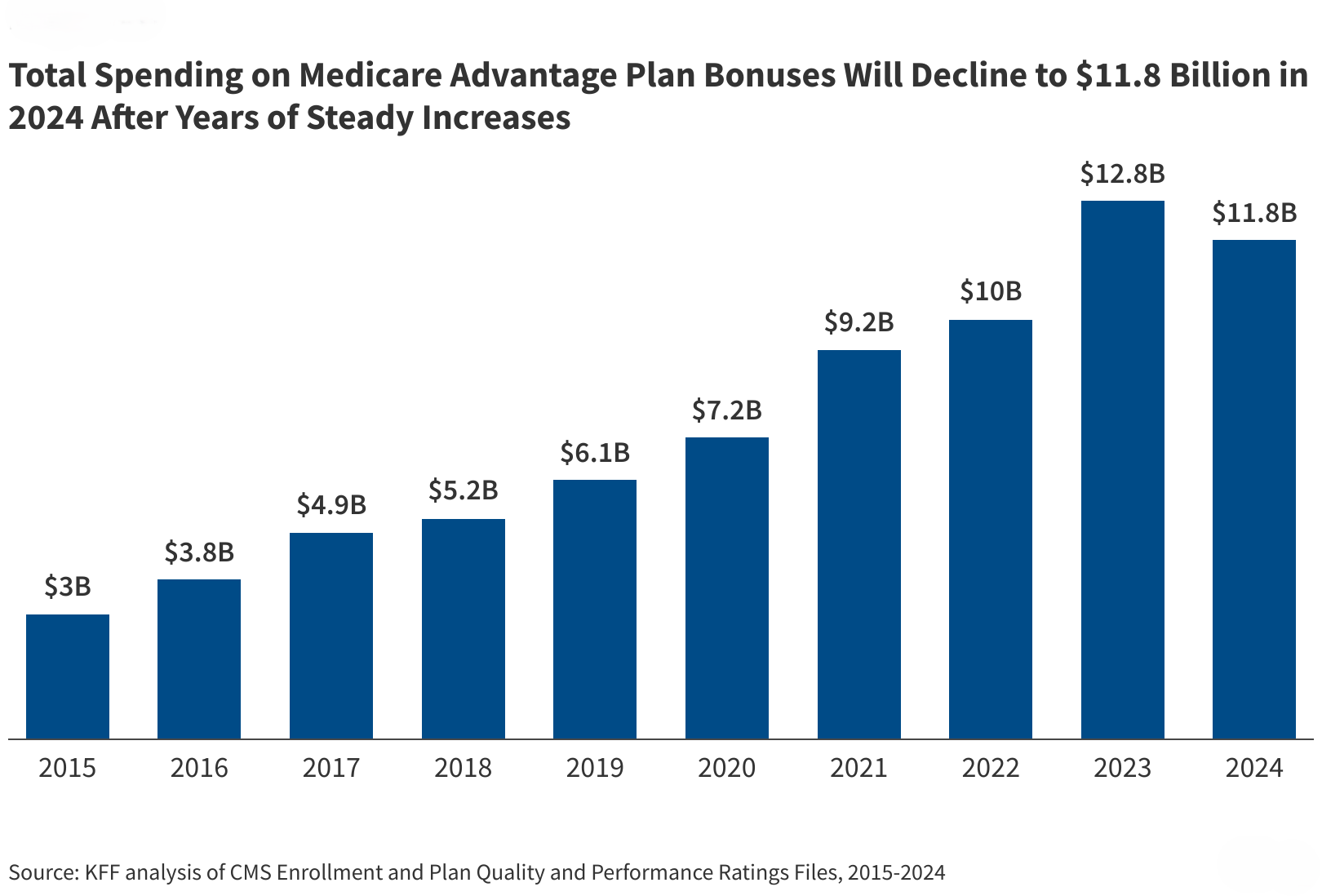
Medicare Advantage Quality Bonus Payments Will Total at Least $11.8 Billion in 2024
Spending on bonus payments increased by more than 400% between 2015 and 2023 and remains higher in 2024 than every year except 2023.
Related: 10 Reasons Why Medicare Advantage Enrollment is Growing and Why It Matters
Health Policy 101: Medicare
 Medicare provides health insurance coverage to 66 million people. It covers a comprehensive set of health care services, including hospitalizations, physician visits, and prescription drugs, along with post-acute care, skilled nursing facility care, home health care, hospice, and preventive services.
Medicare Advantage Enrollees Account for a Rising Share of Inpatient Hospital Days
 This analysis examines the recent growth of Medicare Advantage as a share of hospital inpatient days. Medicare Advantage rose from 13% to 23% of all inpatient days from 2015 to 2022, although there was wide variation among hospitals.
1 in 4 Medicare Beneficiaries with Obesity or Overweight Could Be Eligible for Coverage of Wegovy
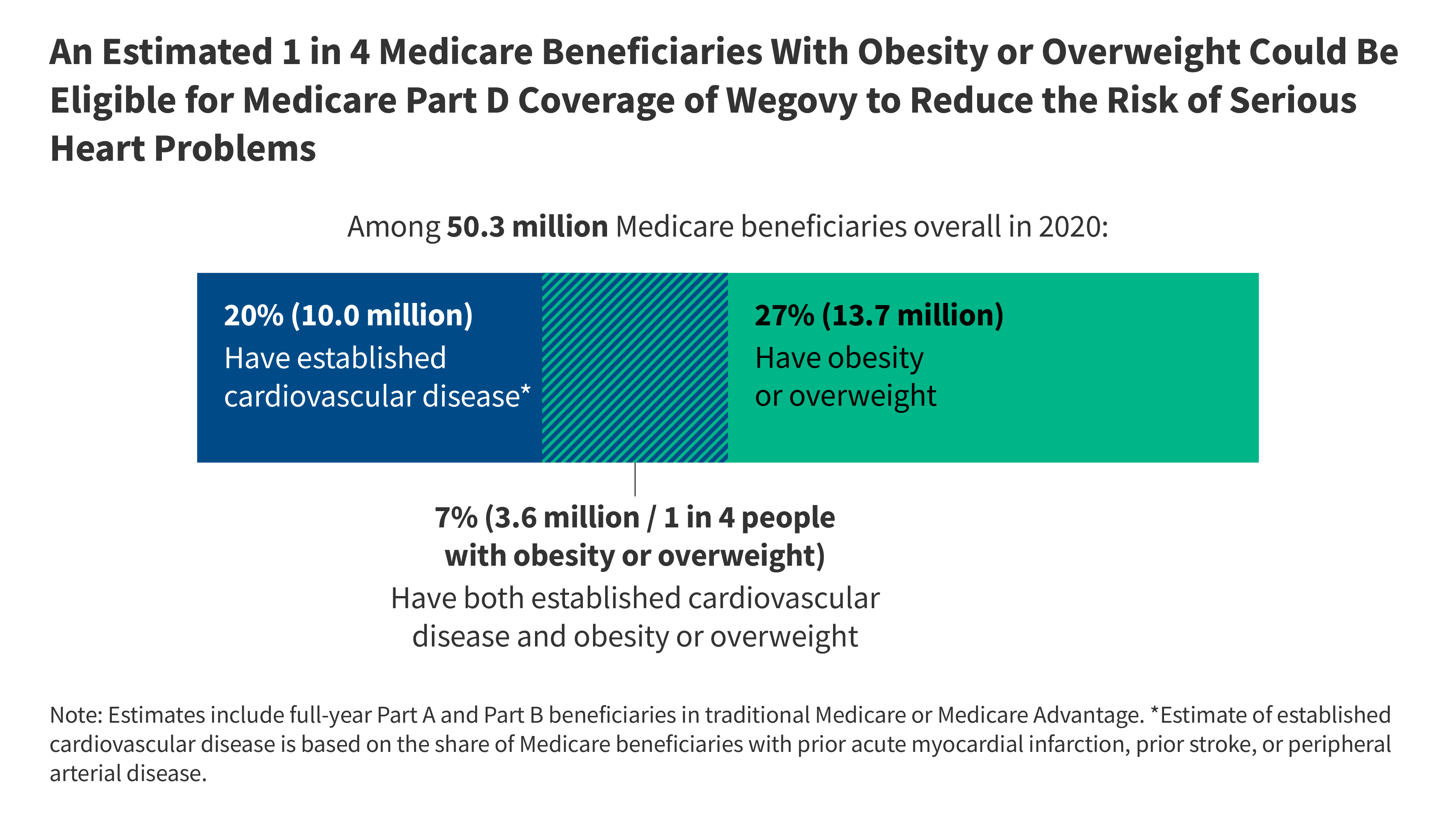 KFF finds that 3.6 million people with Medicare could be eligible for coverage of Wegovy now that the FDA has approved the use of the anti-obesity drug to reduce the risk of heart attacks and stroke in certain patients.
What to Know About Medicare Part D Premiums
 Several provisions in the Inflation Reduction Act are likely to shape Medicare Part D premiums for 2025. We explain how and why premiums might change. Actual premiums will not be known until September.
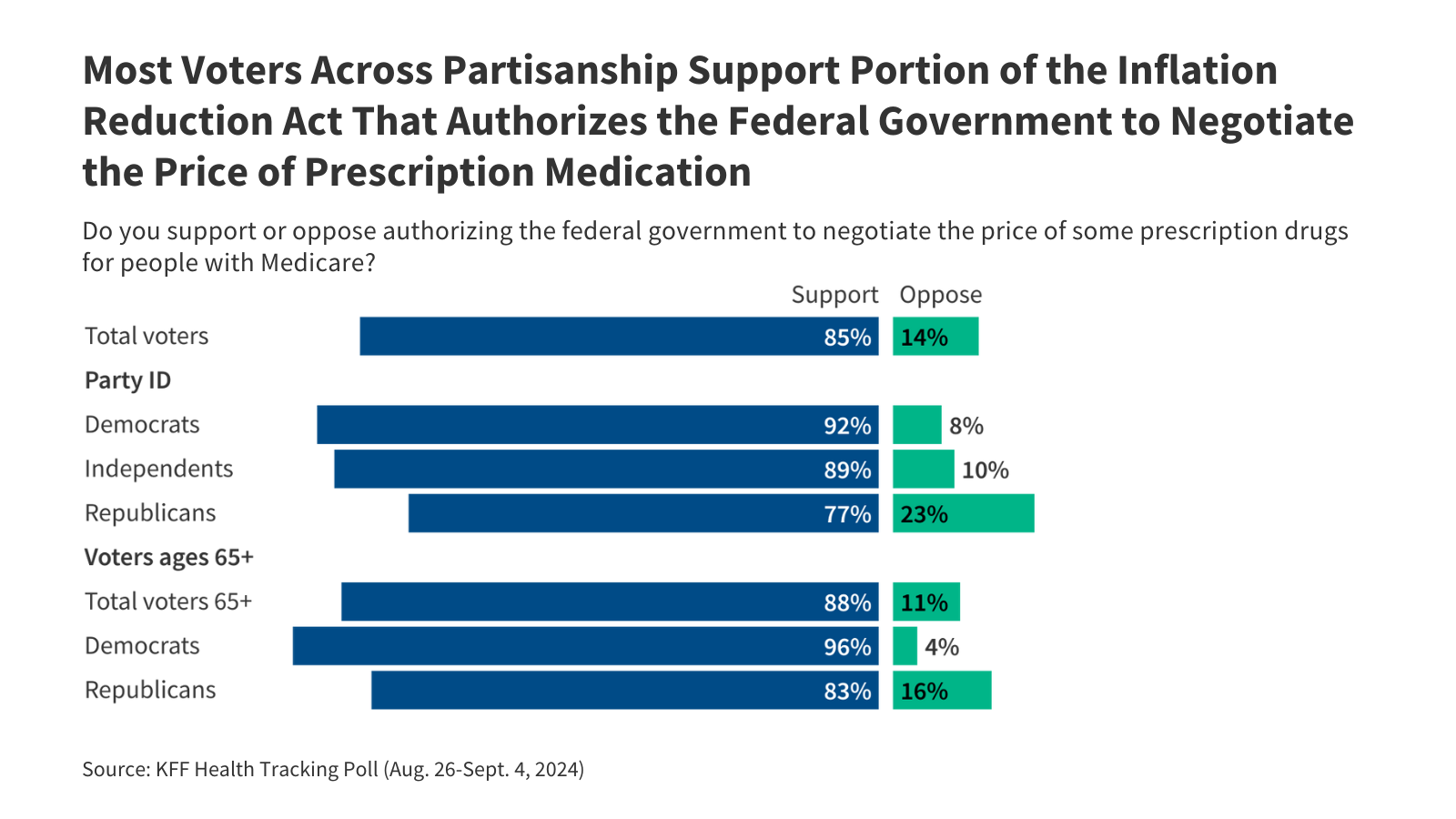
Allowing Medicare to Negotiate Drug Prices Remains Broadly Popular Among Voters, Though Most Are Unaware of the Law
A large majority of voters say they support allowing the federal government to negotiate the price of some prescription drugs for people with Medicare. This includes at least three quarters of Republican, independent, and Democratic voters. At the same time, nearly two thirds of voters (and older voters) are unaware or unsure that there is a law allowing Medicare drug-price negotiations.
Data Visualization
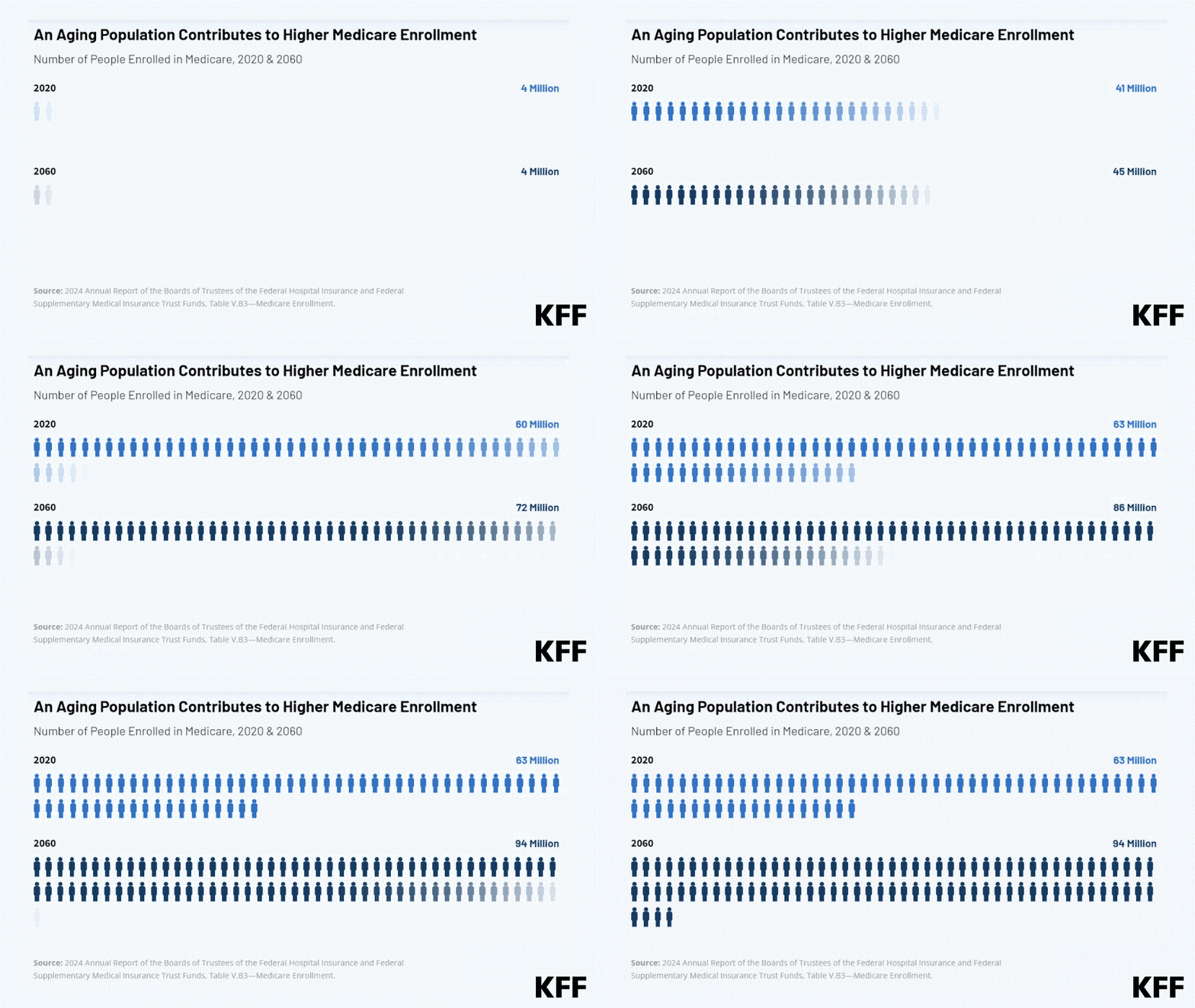
The Facts About Medicare Spending
This interactive provides the facts on Medicare spending. Medicare, which serves 67 million people and accounts for 12 percent of the federal budget and 21 percent of national health spending, is often the focus of discussions about health expenditures, health care affordability and the sustainability of federal health programs.
Explore data on enrollment growth, Medicare spending trends overall and per person, growth in Medicare spending relative to private insurance, spending on benefits and Medicare Advantage, Part A trust fund solvency challenges, and growth in out-of-pocket spending by beneficiaries.
Related: FAQs on Medicare Financing and Trust Fund Solvency
Read MoreMarketing Private Medicare Plans
View the TV Ad Analysis
View the Focus Group Report

Latest News
-
KFF Health News' 'What the Health?': American Health Under Trump — Past, Present, and Future
-
KFF Health News' 'What the Health?': Trump-Harris Debate Showcases Health Policy Differences
-

Longtime Head of L.A. Care To Retire After Navigating Major Medi-Cal Changes
-

With TV Drug Ads, What You See Is Not Necessarily What You Get
-
En los comerciales de medicamentos en TV, lo que ves no siempre es lo que es
-

Feds Killed Plan To Curb Medicare Advantage Overbilling After Industry Opposition