Printer Friendly Page
Medicare

Medicare in Health Reform

The Kaiser Family Foundation has prepared comparisons to the Medicare provisions in the key health reform legislation now working through Congress. Other issue briefs examine the implications of an independent Medicare rate-setting commission and provide historical context for the legislation's proposed Medicare savings.

Resources on the Medicare Prescription Drug Benefit
A collection of reports, fact sheets, surveys, and other research and background material on the Medicare program's new drug benefit and other provisions of the Medicare Prescription Drug, Improvement, and Modernization Act of 2003.

 Recent Documents: (518 results) Pages 1 |  2 |  3 |  4 |  5   >>
Summary of Key Medicare Provisions in H.R. 3962, Affordable Health Care for America Act -- November 2009
This brief describes the major Medicare provisions in the health reform legislation approved by the House on November 7, 2009.
Medicare Part D 2010 Data Spotlights -- November 2009
These data spotlights and other resources related to the Part D Medicare stand-alone drug plan options available to seniors for calendar year 2010.
Medicare Part D 2010 Data Spotlight: The Coverage Gap -- November 2009
This data spotlight examines the coverage gap, or "doughnut hole," in Medicare stand-alone drug plans available in 2010. The spotlight is one in a series analyzing key aspects of the Medicare Part D drug plans that will be available to beneficiaries in 2010.
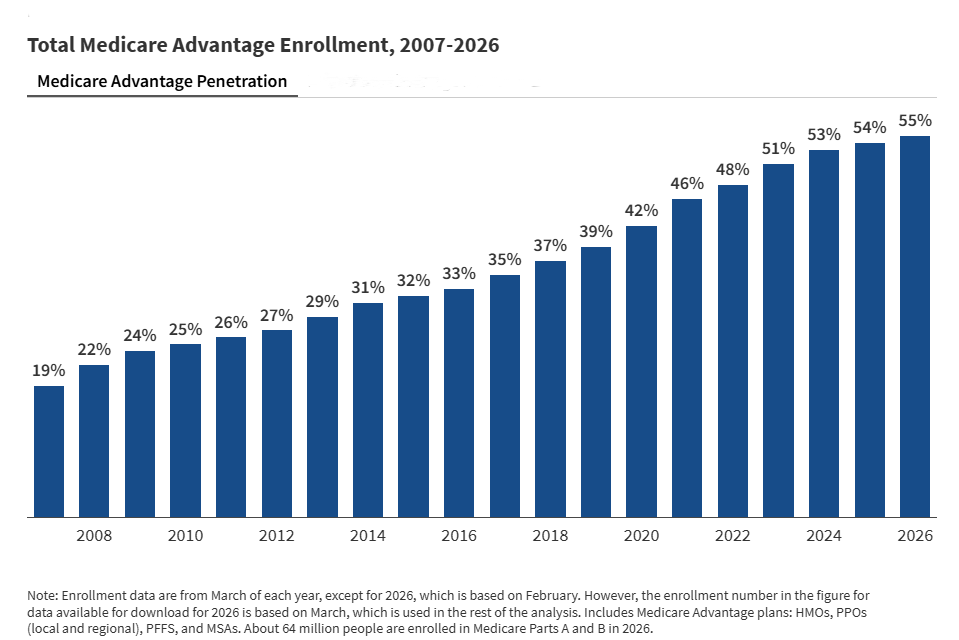
Medicare Advantage 2010 Data Spotlight: Plan Availability and Premiums -- November 2009
This data spotlight examines changes in the availability and premiums of private Medicare Advantage options for Medicare beneficiaries in 2010. 
The Medicare Prescription Drug Benefit - An Updated Fact Sheet -- November 2009
This updated fact sheet includes the latest information and data about the Medicare Drug Benefit, including a breakdown of the standard benefit, enrollment data and an update on additional low-income assistance.
Medicare Advantage Fact Sheet -- November 2009
This updated fact sheet provides an overview of the Medicare Advantage program, describes program changes made by the new drug law in plan participation and beneficiary enrollment, presents data on benefits and premiums, and explains changes in Medicare payments to participating plans.
Medicare Part D Spotlight: Part D Plan Availability in 2010 and Key Changes Since 2006 -- November 2009
This initial analysis examines the stand-alone Medicare drug plan options that will be available to beneficiaries in 2010, including the number of available, premiums for those plans, and benefit designs.
Medicare Health and Prescription Drug Plans Monthly Tracking Report —October 2009 -- October 2009
This brief presents current monthly data on Medicare Advantage plan participation, enrollment and penetration.
Setting Medicare Payment Policy: Is There a Role for an Independent Entity? -- October 2009
This issue brief considers questions associated with the establishment of a new entity to set Medicare payment policy and the implications for beneficiaries, other stakeholders, and program spending.  The idea is being considered as part of health form as a way to improve Medicare's efficiency and control health care costs.
The Social Security COLA and Medicare Part B Premium: Questions, Answers, and Issues -- October 2009
This brief explains how the lack of a cost-of-living increase for Social Security recipients in 2010, and no or low increases through 2012, will affect beneficiaries' monthly premiums for Medicare Part B, as well as the implications for the Medicare and Medicaid programs.
View all items > Pages 1 |  2 |  3 |  4 |  5   >>
Sort Documents by:
Document Type:  
Subtopic:  
Date Range: start     end  Sort
           

Medicare
Medicare, the federal health insurance program that covers 45 million Americans, has played a central role in the U.S. health system since it was established in 1965. Medicare serves all eligible beneficiaries without regard to income or medical history. Most individuals ages 65 and over are automatically entitled to Medicare Part A (the Hospital Insurance Program) if they or their spouse are eligible for Social Security payments. People under 65 who receive Social Security cash payments due to a disability generally become eligible for Medicare after a two-year waiting period. People with end-stage renal disease (ESRD) and amyotrophic lateral sclerosis (ALS, Lou Gehrig’s disease) are entitled to Part A regardless of their age. Part B (the Supplementary Medical Insurance Program) is voluntary, but covers 95% of all Part A beneficiaries.